Blog

Player Character Profile

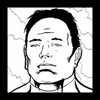
Name: Long Vernal

Played by: Rob

Race: Human
Sex: Male

Class: Barbarian

Strengths: Strength

Weaknesses: Charisma

Background: Outlander. I ran 25 miles to warn the clan of an orc horde. I’d do it again.

Ideals: It is a person’s responsibility to make the most happiness for the whole tribe.

Bonds: I suffer awful visions of a coming disaster and will do anything to stop it.
Flaws: No room for caution, live life to the full.

Additional Notes from Player: Long Vernal, from the Clan of Badenoch, a settlement in a natural basin about 540 square miles of it. It consists of almost entirely beautiful mountainous country, many hills exceeding 3,000 feet, and contains in the forests of Alder, Drumocher, Gaick and Feshie some of the best deer country in the region. The clan comprises of 300 males and females whom frequently battle the elements and the occasional hordes of Orc. Their symbol is of a stag crushing an orcs head which is tattooed on a clan member’s chest at an early age. The clan leader is called Angar Lupin whom is rumoured to be a werewolf! Long Vernal was thrust into exile after a particular nasty attack from an Orc horde. The Clan was butchered and scattered in all directions. Long Vernal believes his leader is still alive, as he appears in Long’s dreams. The search continues…

Development during series 1: This contains a spoiler alert… Long followed his clan instincts loving the wide plains and outdoor adventure and detesting enclosed, unnatural spaces. His high energy and lack of room for caution meant that he got into more scrapes than any other member of the party. He encountered more visions of his clan leader, Angar Lupin, in the build up to the ‘Summit’ and saw the ground swallow him up. This turned out to be an apt vision for Long himself and yet even at the end, his heart leaped to freedom from his damaged body.

Character Portraits used: 60 Terrible Character Portraits for Creative Commons Release by ‘A Terrible Idea’

DM Note #5

Rules for Horse Riding

This refers to Episode 5 Agora Core: Escape.

The conclusion of the episode involves the party trying to escape on horsebackPevel’s attempt has to be a series highlight.

This leads me onto today’s topic.  How do you decide how capable a Player Character (PC) is at riding a particular creature?

In version 3.5 on Dungeons & Dragons, there was a Ride skill, and so the simple way to determine if you could successfully ride a creature was for the player to roll a d20 and add their Ride skill number to the total.  If this was equal or higher than the Difficulty Class (DC) total that the Dungeon Master (DM) decided on, then the player would have succeeded.  If not, the player failed to complete the task, in this case, ride a horse.

In the 5th edition (5e) of Dungeons & Dragons there is no such thing as a Ride skill and no set way of determining
the skill according to the Player’s Handbook. Instead there are a series of ability-based skills that PCs can be proficient in – proficiency is a bonus number added to particular skills.  Here is how I applied the ability-based
skills to this task.

As the horses were no familiar with the players, they had to see compatible they were, in other words, how comfortable the horses were being handled by a PC.  I used the skill Animal Handling (a Wisdom-based skill) for this.  However, even if a horse is comfortable around a PC, that doesn’t make the character agile enough to be a rider.  So the second roll I believe the players should do is an Athletics check (a Dexterity-based skill) to see if they could
successfully get onto the horse and balance whilst the horse moves.   Both these challenges can be done against a Difficulty Class determined by the DM.   If the PC and creature have a history together I wouldn’t ask for a check to be made as the rider and horse already have this level of understanding and ability.

This was my solution to this challenge.  In the finale (episode 5) to Series 1, I just got the players to roll animal handling as we were running short of time.  To further save time, there were two levels of Difficulty to the rolI – 15 or above to start riding in 1 round (6 seconds) and 10 or above to start riding in 2 rounds (12 seconds).  In the case of Pevel his desperate second attempt was more desperate and needed a swift move, so I got him to make an additional Athletics Check as well to pull it off.

So how do other DMs and groups work out their riding skill?  Let me know.

This is the end of the DM Notes for Series 1.  I hope you’ve enjoyed the content and found some of them useful.  Stay tuned for Series 2 later in the summer.

DM Note #4b

Dealing with Death

This refers to Episode 4, Confined: Part 2 of Agora Core.

So,
a certain event happened to one of the party in this episode… you can hear it in all its glorious, gory and somewhat hilarious details.   I should say up front that the player involved took it all really well, which was a relief.

I have to say that I’m a fan of the new Death Saving Throws used in the 5th Edition of Dungeons and Dragons.  The ‘3 strikes (failed throws of 10 or under on a d20) and you’re out’ approach gives a sense of drama and also provides comrades a chance to revive the fallen player.

But if this doesn’t happen – if the dice gods are not kind and allies are busy elsewhere – what happens when the Player Character (PC) actually dies?

I have played in games where the PCs do die – indeed, in one-shot roleplays high-stakes and player vs player conflict makes it inevitable, but when the game is longer there is a lot of player investment in a character and it’s not a good feeling to lose the character, for the character sheet to be metaphorically and sometimes literally torn up.

On the other hand, what if your character comes back from the dead?  What if they are given another life, or the Dungeon Master (DM) tweaks events in the player’s favour?  To me that cheapens the drama, like playing a computer game in cheat-mode.  The roleplay may not be the same for the players either after such an event if they
feel they are effectively immortal.

So how can a balance be struck between giving the player a fair chance of survival without potentially damaging the authenticity of the roleplay experience?

This is how it was managed when Laura Bailey’s character Vex’ahlia died in Critical Role episode 44.  The DM Matt Mercer combines the Revivify spells their cleric used with a group-assisted roll.

It seems fair that in order to avoid death to a PC there has to be a price to pay, either in gold or through effort in  order to bring the player back to the land of the living. Such a gift has to be earned for the rules to be bent in the player’s favour.  If death cannot be negotiated with, then they players could always try to direct approach and go to the realm of the dead (the underworld sometimes also known as Hades or Hel).  A mission could be attempted to bring the person back such as with Orpheus and Eurydice.

Finally, in considering roleplay authenticity and loss, there is a blog entry by Will Wheaton where he describes the events of Aeofel’s death as part of the Acquisitions Incorporated roleplay series.  On this event, Will says “I’m happy that I stayed true to Aeofel’s beliefs and played him the way I wrote him.”

Player Character Profile

Name: Ikki
Played by: Ralph

Race: Aarakocra

Sex: Female

Class: Monk

Strengths: Dexterity and Flight

Weaknesses: Intelligence

Background: Outlander. I’m driven by wanderlust that led me away from home.
Ideals: Change, life is a constant change and we must change with it.

Bonds: My family is the most important thing in my life, even when they are far from me.

Flaws: Violence is my answer to almost any challenge.

Unique features: Being an Aarakocra makes Ikki very unique outside of the mountains. But it’s not just her hawk headed appearance and talons, it’s also her wings, which allow her to fly up to a distance of 50ft every turn (6 seconds).

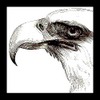
Additional Notes from Player: On starting the campaign Ralph had the idea of creating an Aarakocran Pro Wrestler, inspired by a picture on the web. A goal Ikki mentioned would be to defeat the Undertaker at Summerslam.

Development during series 1: So far Ikki has been very much the outsider looking on and resolving disputes with violence, which is very much in line with her background. She is also receiving visions of an impending Trial of the Talons, a fight to claim an Aarakocra partner that links her fate to that of her family as it was her sister who instigated it.

DM Note #4

Reordering and Recycling

This refers to Episode 4, Confined: Part 1 of Agora Core:

In DM Note #2 I mentioned that the players actions and decisions took the plot in an unpredictable direction and set things in motion that meant it would be impossible for them to visit the town of Mid-Nis unless they were disguised or seeing it through the bars of their prison cells.  This meant that for me as a Dungeon Master (DM) many plot elements would go unused and also more work was needed to prepare for the next episode.

Fortunately for me, we were missing a few players in Week 3, so I made more of the remaining journey to Mid-Nis and that provided more time for creating and setting up scenes and characters online in Roll20.

The prison cell was a brand new section which would make use of the town guards (already created). The part which was recycled or re-appropriated was the Non-Player Character (NPC) known as Belstogley. Belstogley is a barbarian and is the current fighting champion of the Mid-Nis Festival of the Clans and was meant to be in the ring defending his title against brave Player Characters (PCs) should they dare to fight.  However, with that plot highly unlikely, another chapter in Belstogley ‘s life was being written in.  It turns out that this hardy fighter also liked his drink and occasionally got himself into trouble.

The interaction between the players and Belstogley made me very glad that I did this.  Sure, it wasn’t what was originally intended, but it is the players who dictate where the plot goes and not the DM.  Of course, just because he is working with them, doesn’t necessarily mean that the NPC is a suitable party member.  Fortunately, Belstogley did manage to provide the party with some useful information about the guardhouse.

Belstogley will make another appearance in Part 2 of Episode 4.


Player Character Profile

Name: Orix Crota
Played by: Finn

Race: Human
Sex: Male

Class: Wizard

Strengths: Dexterity and Intelligence

Weaknesses: None

Background: Criminal. The best way to get me to do something is to tell me I can’t do it. I don’t pay attention to the risks in a situation. Never tell me the odds.

Ideals: Freedom. Chains are meant to be broken, as are those who would forge them.
Bonds: I’m guilty of a terrible crime. I hope I can redeem myself for it.

Flaws: If there’s a plan, I’ll forget it. If I don’t forget it, I’ll ignore it.

Development during series 1: Orix lived up to his chaotic neutral alignment, sometimes trying things just to see what would happen. His curiosity has brought him both good and bad results. The visions he experienced as the ‘Summit’ approached were of his college days when he helped expel a fellow mage student, Vian by getting him into trouble. Could this be the terrible crime he feels guilty of? In the visions he say Vian approach the mysterious Mara Society in the north with some apprehension.

Character Portraits used: 60 Terrible Character Portraits for Creative Commons Release by ‘A Terrible Idea’

DM Note #3

Visions

This refers to the third episode of Agora Core:

I spoke briefly in #1 about characters having backstory and how in Agora Core, the players were allowed to create their own.  In part 2, the characters experienced visionary dreams which they could partly manipulate if their minds were alert enough.  This was the first time that I tried to interact with their backstory.  Based on the information they provided, I could work some information in that either shed light on a past experience or about events that will happen soon.  A good example of visions in roleplay is in Titans Grave, and also Critical Role.

It is hard to say how much the players digested of this information because they were in the middle of a mission at the time.  The cause of the visions themselves is a longer plot arc that is playing out in the background for now but it provides a way to give the players insight.

  • Will Orix go after Vian, the boy who he had helped to expel from magic college?
  • Will Ikki be visited by his kind and have to face the Trial of Talons?
  • Will Hector face an assassination attempt for having stolen a precious medallion?
  • Will Long ever find his leader and prevent a disaster from befalling his clan?
  • Will Nomo be tempted to visit the site where he was attacked and burned by an orc and where he witnessed a monk burying an artefact?
  • Will Pevel overcome the demons of his childhood and be able to face conflict head on?

This is what the visions were for; to ask questions of the player characters and see if they pay heed to the warning of thing to come or want to pursue an answer for themselves.


Player Character Profile

Name: Nomo
Played by: Terry
Race: Male
Class: Monk
Strengths: Dexterity (very high)
Weaknesses: Intelligence and Charisma

Background: Hermit. I am utterly serene, even in the face of disaster.  I’m oblivious to etiquette and social
expectations.
Ideals: Greater Good. My gifts are meant to be shared with all, not used for my own benefit.
Bonds: My isolation gave me great insight into a great evil that only I can destroy.
Flaws: I like keeping secrets and won’t share them with anyone.

Additional Notes from Player:  Nomo Naurehta doesn’t know what name his Elvish parents gave to him. His mentor, Ereb Noldo, found him standing outside the smoldering ruins of a remote outpost near Orcish territory. Nomo was a toddler in Elvish terms, badly scarred by the fire and unable to speak. While there were no elves there, Ereb believed some elves had been captured and taken as slaves or hostages.

A half-elf monk living in self-imposed exile, Ereb raised Nomo as he himself had been raised in the monastery, training him in martial arts and how to master his fear of fire, always focusing on becoming as swift and nimble as forest animals and birds, and as aware of his surroundings. Ereb’s favourite question was “Is it better to absorb a blow, or to be elsewhere when the blow falls?”  Ereb was nearly 200 years old when he died, and he encouraged Nomo to seek others who would value his gifts.

Development during series 1: Nomo has had to wrestle with the greater good of his party and the conflicting influences of Hector and Long.  He has been a stable, consistent force the others could depend on and very useful in combat.  Nomo experienced visions of an orc attack he witnessed when very young and this resulted in his fire scars.  This took place at a now abandoned monastery to the south of DaNis.

Character Portraits used:
60 Terrible Character Portraits for Creative Commons Release by ‘A Terrible Idea’
DM Note #2

How far down does the rabbit hole go?

This refers to the second episode of Agora Core:

The journey between the towns of Nis-Ton and Mid-Nis was designed to be 2 episodes at most, adding some intrigue, action and a chance for the Player Characters (PCs) to get to know their characters better along the way.  This episode was part 2 of their journey.  The intrigue was to create a room in the inn where they were to rest for the night that had a sign on it which said ‘Keep Out’ and a quiet wailing noise…

This side quest could have stopped there.  They had no need to snoop, and yet they snooped.  Once inside the room the windows were boarded up and there was no visible source of the wailing sound.  Orix’s curiosity got the better of him and he stabbed holes into the paintings on the wall. They found a hole…

The hole had spiritual entities living inside it.  Having got this far, the prepared sucker-punch was that if they stuck their head inside the hole they would have to pass a wisdom saving throw or be possessed by an animal spirit and behave oddly for a time until the group could seek clericial aid. The players, however, wanted to find the source of the wailing.  They wanted to see how far down the hole went…

From now on, the plot was completely off-book, with Long in very real peril having dropped off the pages and into the abyss.

The resultant actions and decisions took the group on a very different path to the one originally planned.

As a DM this was an exciting challenge – how much would their employer, Elstan, suspect and how would he react?  What consequences would this have when the group reached the town of Mid-Nis?  In such situations the DM is roleplaying as much as the players are.  Their employer is a Non-Player Character (NPC) with a motive and resources of his own.  I decided that he would have been in the next room to the merchant Lanir and so would have heard the group force entry and attack him.  As a response, he would have sent a message ahead to the town guards through means of a messenger bird to request the group’s arrest.  They were no longer trusted by their Employer, Elstan, and through his actions they would no longer be able to enjoy Mid-Nis Festival of the Clans and would face a trial, which could result in their execution.

Player Character Profile

Name: Pevel
Played by: Dan
Race: Human
Sex: Male
Class: Rogue
Strengths: Charisma and Dexterity
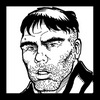
Weaknesses: Strength and a weasely disposition, described by the player as ‘pathetic’.

Additional Notes from Player: Dan describes Pevel as “a weasely blub of cowardice.  A young man that would betray all his friends to avoid being bullied again, a fat Rincewind, an adolescent Falstaff with the humour, pathetic.”

Development during series 1: Pevel has indeed been cowardly, but his survival skills have allowed him to be sneaky and do anything to avoid near-death experiences.  We also learned in series 1 that Pevel comes from the town of Mid-Nis, which proves useful when the group have to make haste.

Character Portraits used:
60 Terrible Character Portraits for Creative Commons Release by ‘A Terrible Idea’